
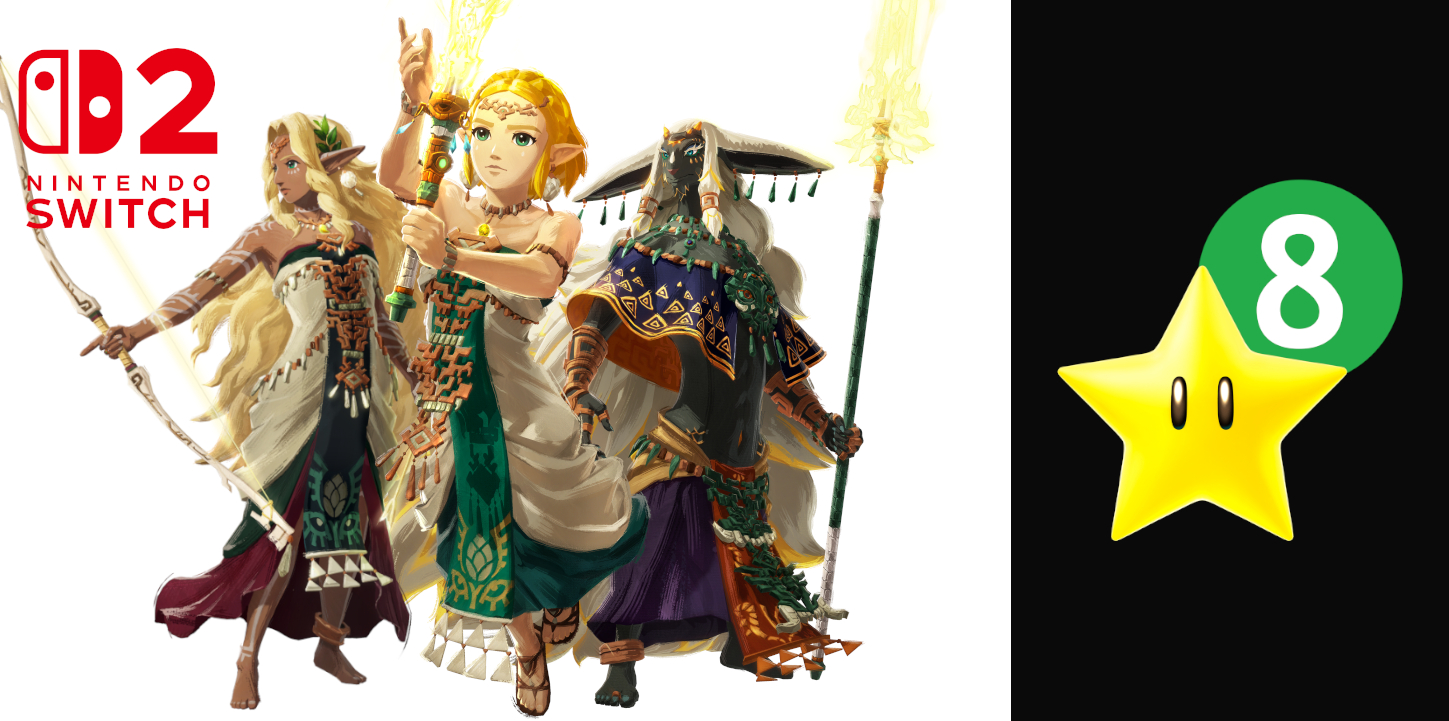
Did you have unanswered questions once you’d finished The Legend of Zelda: Tears of the Kingdom? Just what was Princess Zelda up to while Link was ‘saving the world’ in Tears of the Kingdom? We know she met King Rauru somehow, but a lot was left unexplained and up to your imagination as the player. Enter Hyrule Warriors: Age of Imprisonment; Yes, it is here to fill those gaps and perhaps even convert those of you who have little interest in the Dynasty Warriors-style hack-n-slash genre. It certainly converted me into a believer.
A link to the past
Hyrule Warriors: Age of Imprisonment kicks off at the exact point that Link and Zelda become separated in Tears of the Kingdom. Zelda finds herself in a familiar world, but it’s not quite the same. She’s been transported many years back to events that have not yet taken place in Hyrule. As luck would have it, it’s King Rauru and his queen, Sonia, who find a confused and dazed Zelda in a meadow. After a brisk introduction, Zelda’s new quest begins and enlightens the kingdom about Ganondorf’s motives. In the history of Hyrule, he’s the only male born in the Gerudo tribe and harbours false ambitions of stepping into Rauru and Sonia’s royalty. Before long, things turn sour and it’s up to Zelda to assist Rauru, the sages, and assorted warriors to help defend Hyrule from the Demon King’s gloom-infested machinations.
There’s a massive focus on story in this Warriors instalment.
Unlike any other Legend of Zelda game you’ve played before, there’s a massive focus on story in this Warriors instalment. The story is stacked with over 110 separate scenes by the time credits rolls, to deliver the narrative in large, cinematic doses. It’s well-written and expertly crafted to make a believable story that leads up into Tears of the Kingdom, which lore fans of Zelda will devour. As you might expect, there are many allies you’ll get to know in this new adventure who’ll be fighting alongside Zelda, each with their own unique traits and quirks. It feels like this game knows it’s catering to a dual audience of die-hard Zelda lore obsessive and people who might have previously sneered at hack-n-slash games.
Elemental heroes
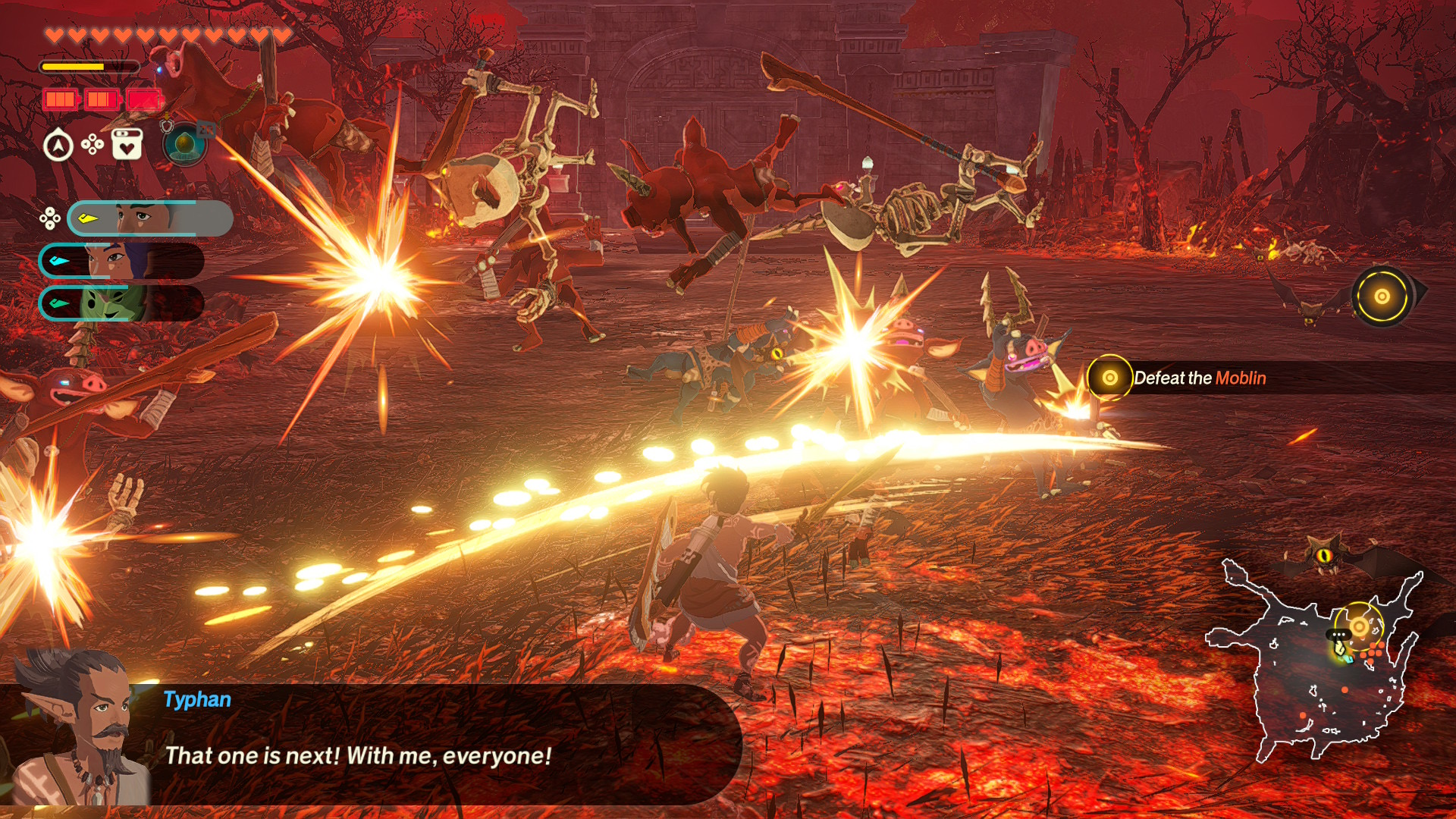
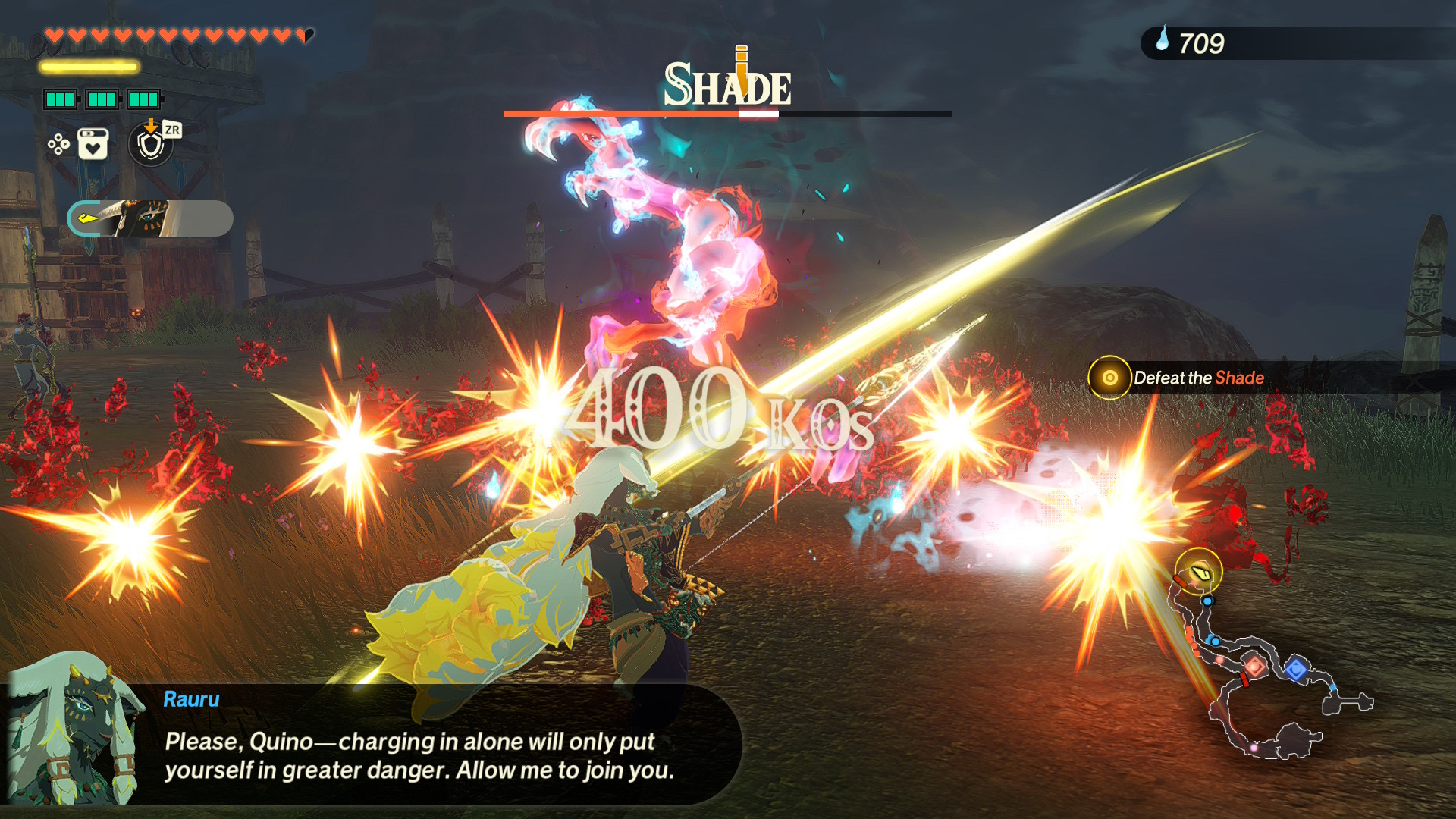
Most battles consist of a team of up to four allies battling against evil hordes, each with their own styles. For example, the queen of the Zora tribe, Qia, fights with water elements by her side. If an enemy is infused with electricity, that foe is about to feel your watery wrath. Likewise, fire and ice oppose, water removes sludge on enemies (which stops you doing major damage if not removed), wind reflects projectiles and sends enemies flying and more.
And no, each ally isn’t locked into one element forever. You can combine complimentary elements in your favour thanks to the Zonai devices you can map to buttons. As with Tears of the Kingdom, you’ll keep an eye on a battery-power meter that can be recharged via inventory or picked up mid-battle.
This system brings a lot of variety to the button-mashing, and just when you think you’ve seen everything, the game takes to the skies…
It’s important to get a hang of the combo system to deal the most damage. It’s essentially a mix of the X and Y buttons, complemented with other actions. The Construct Drive will destroy enemy shields and the Rising Spiral drops flying foes to the ground, alongside others I’ll leave for you to experiment with. After all, as with Tears of the Kingdom, it’s all about experimenting what works. This system brings a lot of variety to the button-mashing, and just when you think you’ve seen everything, the game takes to the skies with a Knight Construct character that will remind you very much of a certain pointy-eared hero from Hyrule.
Star Knight Construct
In these sections the pace swaps to a Star Fox-style game where you’re shooting foes from the sky. It mostly takes place from a from a behind-third-person view, and later from top-down when required. Zonai devices can be collected mid-flight to help you shoot rockets or missiles at stronger foes. It’s a fantastic way to change up the pace from continuous on-ground melees and adds to the lore.
There really is a lot to do in Age of Imprisonment.
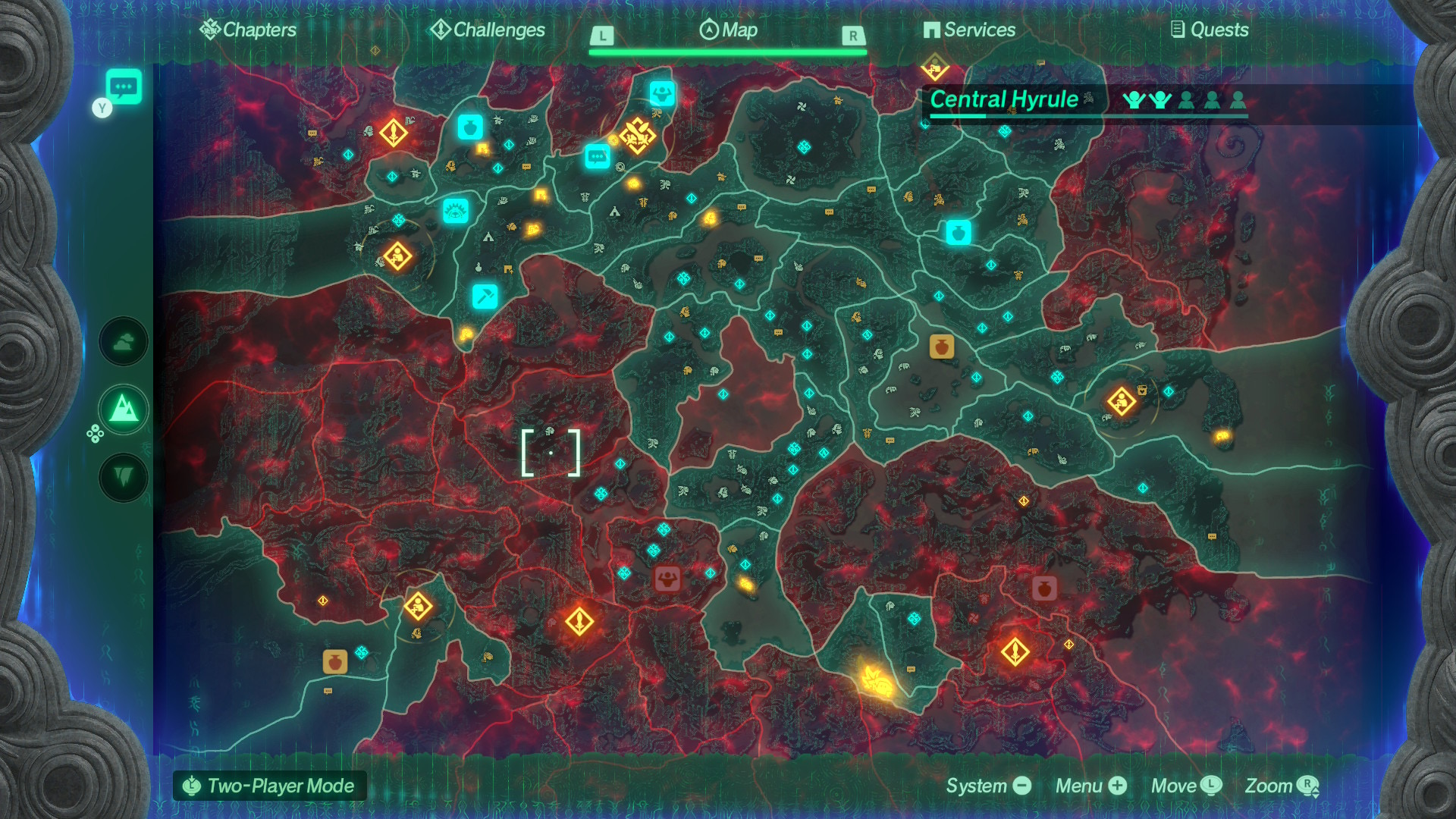
The map can feel a little daunting at times: side missions, named challenges, and a host of tasks to level up the 19+ characters you can unlock. These challenges also act as the method of discovering new characters and provide the items you’ll need to upgrade weapons at the Weapons Research Base. Enhancing your weapon comes with perks: recovering hearts (your life gauge) by defeating enemies, automatic guarding, and many other improvements. While you’re out there destroying hordes, you’ll also be tasked with quests from your various allies to unlock important rewards that increase your combo count or heart gauge. To secure these quest rewards you’ll need items gathered in-the-field, meaning you’ll often stare at a map filled with icons. It’s a little daunting, but necessary to overcome the boss battles. The enemy hordes do not politely stop while you browse the map, as you’ll frequently return to territories they’ve overrun, to reclaim them.

The frame rate cap
What is impressive is seeing the Switch 2 run the game at 60 fps while slashing hundreds of enemies on screen at once. Jumping on a Zonai rocket and smashing through a pack is exhilarating and, yes, a little comical to watch. Unfortunately, it’s not all smooth ‘rocket sailing’. When my wife joined me for local split-screen co-op, the framerate visibly tanked. By eye it looked like it dipped below 30 fps. Hardly ideal after seeing what the single-player mode pulls off.
What is impressive is seeing the Switch 2 run the game at 60 fps while slashing hundreds of enemies on screen at once.
Accessibility options here are modest, if not minimal, which is to be expected when it come to most Nintendo entries. It also falls a little short in the mission design. While the core combat loop is extremely solid, many missions feel a little too safe, too corridor-like, too routine. Also, the endgame can lean toward busy-work (defensive missions, map icons piling up) rather than truly new experiences.
A link between genres
There is much left unsaid, and it’s so for a reason. Hyrule Warriors: Age of Imprisonment has many surprises up its sleeve and is unquestionably quite the challenge in its 30 hours of play time. The fact that Koei Tecmo paced it so incredibly well, combined with the said cutscenes, speak volumes of their understanding of what makes these hack-n-slash games so much fun. If you’re on the fence about taking the plunge, then I highly recommend you drag your feet out of the gloom and follow the light. It’s my surprise of the year.
REVIEW CODE PROVIDED BY: NINTENDO
For more Nintendo Reviews, click here.




0 Comments