

Pokémon Pokopia is the Pokémon game we had no idea we were waiting for – a cosy life sim wrapped in a blanket of quiet melancholy and hopeful restoration. It blends resource collecting, dex-completing, near limitless block-building potential with adorable Pokémon, amusing dialogue, soothing background music and quirky sound effects. Oh, and there’s a deep unexpectedly emotional story. Prepare to drop hours into this charming world, slowly building to your heart’s content.
Since its early beginnings over 30 years ago on the Nintendo Gameboy, Pokémon has been enchanting our lives. The Pokémon franchise has enjoyed global success with its mainline titles (barring a few recent ones) as well as various spinoff titles including Pokémon Legends and Pokémon Go and merchandise galore; it’s very much the case of adding a sprinkle of Pokémon and the dish will be a hit. Pokémon Pokopia definitely has that magic, combining beloved Pokémon with a relaxing life sim, soothingly satisfying block-building creativity and freedom, and serving the gaming community an absolute feast of a game. Pokopia was conceived by the creative minds at Game Freak and co-developed with Koei Tecmo Games (Omega Force), who brought us the wondrous Dragon Quest Builders 2. Omega Force’s influence is clearly felt in Pokopia, from the graphical style to the cute little lightbulb animations when you learn a recipe. They’ve done brilliantly, creating a perfectly blended Pokémon sandbox experience.
Not being a fan of other block based building games or the goofy Ditto inspired face of the player’s character, I was initially not drawn to Pokopia. However, the game was quick to rid me of these feelings. It endeared me to those simple eyes and a world pulling me in all directions with rainbow and gold sparkles here and there and rustling bushes calling out. By introducing lore from past games and media in an accessible way, Pokopia delivers a time-absorbing, yet delightfully charming game to OGs and newbies alike.
HOPE SPRINGS ANEW
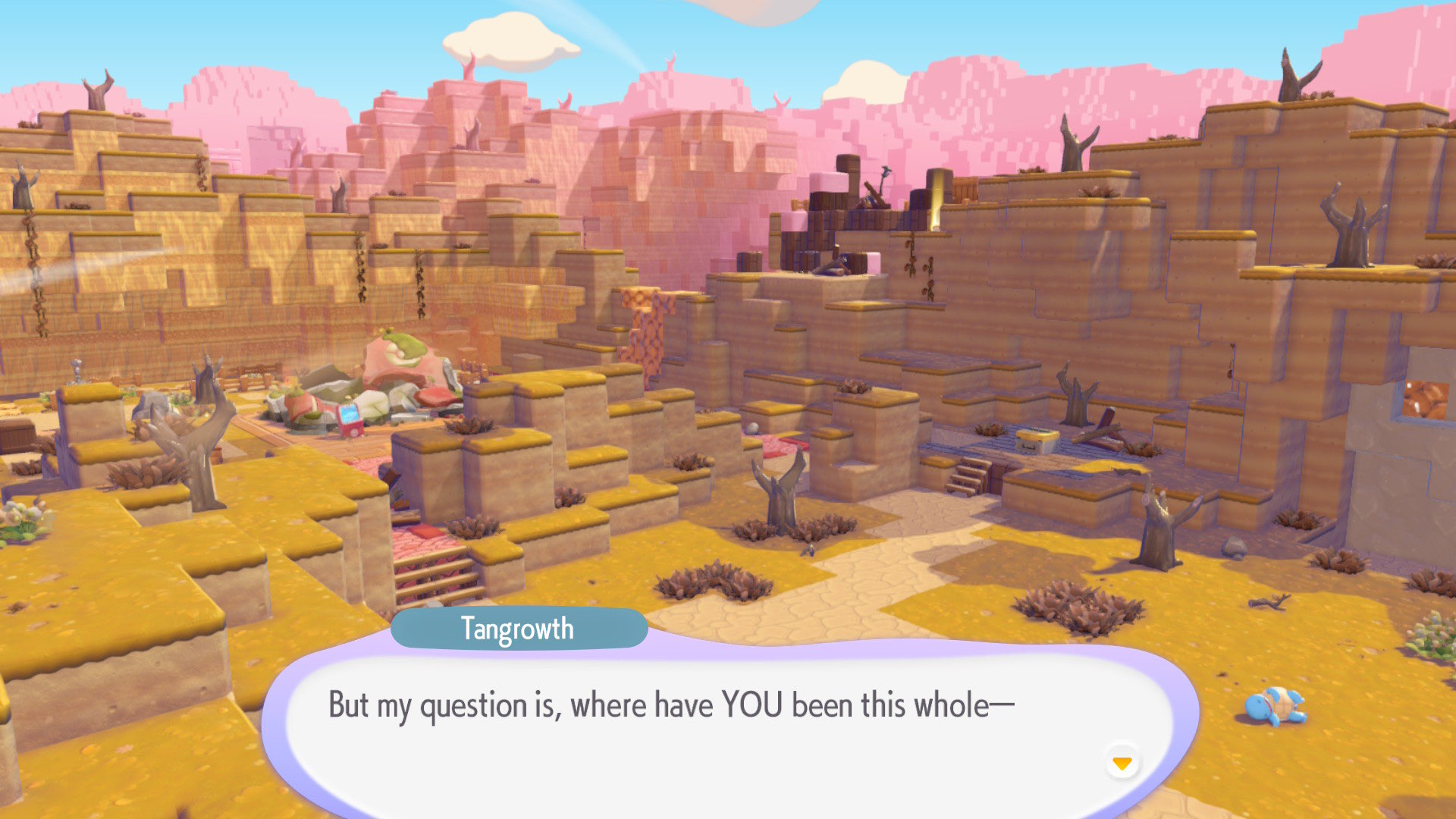
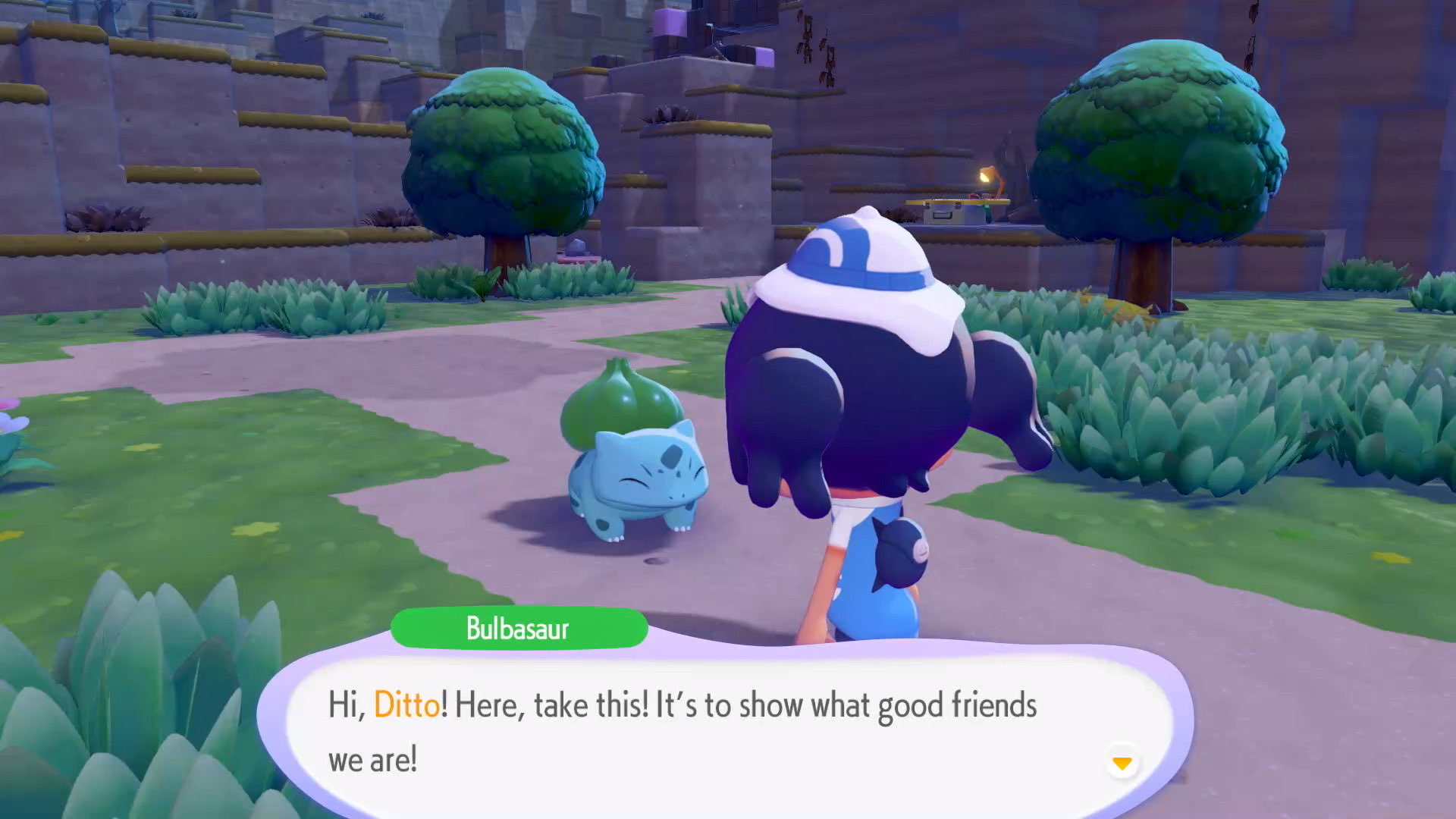
As mentioned, you play as Ditto. You awaken in a barren world and meet a lone Tangrowth, who will become your guide throughout the story. Without spoiling too much, I was immediately drawn into the compelling mystery… “Where are the other Pokémon? Where are the humans? What happened here!?”. Given just a few pieces of the puzzle I was intrigued and excited to find out more and piece together the story.
Block by block we’ll rebuild and heal a broken world…
Pokopia’s core gameplay loop revolves around habitat restoration. Being a transforming Pokémon, your Ditto is able to acquire new abilities from other Pokémon by watching and copying their actions. I love this mechanic! It is executed subtly with clever animations and named after the well known Pokémon moves. Putting these learned abilities into action, together with gathered resources you craft, slowly bring life to the world.. and in the words of Tangrowth, “Hope springs anew”. These simple repeated actions are deeply satisfying; watering a dry patch of soil, adding a touch of grass, throwing a few leaves together for a bed, it all feels meaningful in a world that visibly responds to a loving touch – No act of kindness, no matter how small, is ever wasted.
WHAT MAKES A HOUSE A HOME?
In the world, a ‘habitat’ could be something as simple as four blocks of grass or as complicated as using rare items. Once a new Pokémon appears, you will want to make it more comfortable, and nothing beats the comforts of a home. In Pokopia a house comes in two forms: a prefabricated kit or a block-built version, but both will not be real habitable homes until three different pieces of furniture are placed within. Pokémon have discerning tastes, they will not move into a home if it contains something they dislike. Watching a Pokémon suddenly fall into despair because you have removed a box or cut a bit of grass rendering them homeless, as it is no longer a defined ‘habitat’, made me feel really guilty. These subtle touches turn a vanilla NPC into a being I feel personally responsible for.

PLAY YOUR WAY
With a lack of forced pacing, Pokopia embraces your gaming style. I played a story-focused game and post-story, I am enjoying the creativity of building my perfect world. Others have opted for building up the first town completely and leaving no block untouched before heading to a new town and continuing the adventure. The world is awash with distractions… a glint on a cliff turns a sticks-and-stones gathering excursion into an archaeological treasure hunt. Maybe adding to an already long list of tasks could seem a little overwhelming, but herein lies the beautiful addiction of Pokopia… you want to keep going! You want to find the treasure in the cave, you want to build a bed for Bulbasaur, you want to fill that gap in the ground. You never want to stop!
Herein lies the beautiful addiction of Pokopia… You never want to stop!
Endless exploring and gathering leads to the inevitable dilemma of every hoarder – storage. My biggest gripe was the lack of universal storage, we can build any number of storage boxes but with no way of accessing all stored items at one time. So, I needed to remember which box, on which map, I stored that pesky fire pit… It was a little frustrating (PS. I still have not found it). This is somewhat alleviated by organising and colour coding/labeling storage boxes, as well as the neat feature of placing storage boxes next to a crafting table and being able to craft anything as long as the materials are in those boxes.
WHO MOVED MY CURSOR?
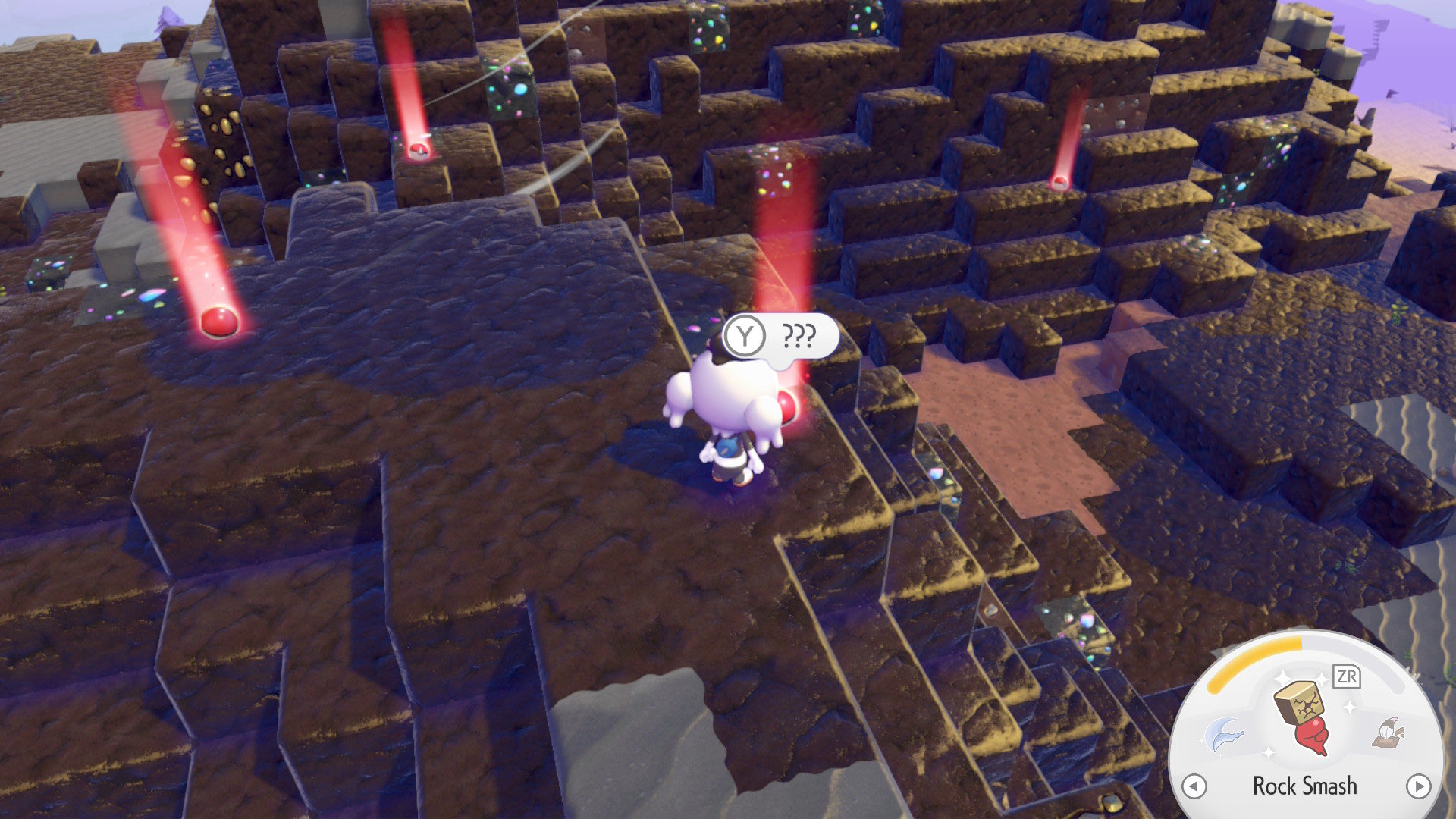
Pokopia can be played using the Joy-Cons or a Pro controller and can utilise the Switch 2’s mouse controls feature. While I still prefer the unmatched comfort of the Pro controller, terraforming with mouse controls is quick and efficient. It also offers two types of tutorials. The first is an unobtrusive popup explaining basic controls and the second is a window popup explaining more detailed mechanics. Actions displayed on screen also reflect the corresponding controller button, making for a very user friendly experience. The Pokédex also has a handy Tip and Tricks feature which archives all these tutorials into an easily navigable menu system. This system works beautifully, I felt empowered with vital information, and it was easily available when I needed a refresher.
Terraforming with mouse controls is quick and efficient.
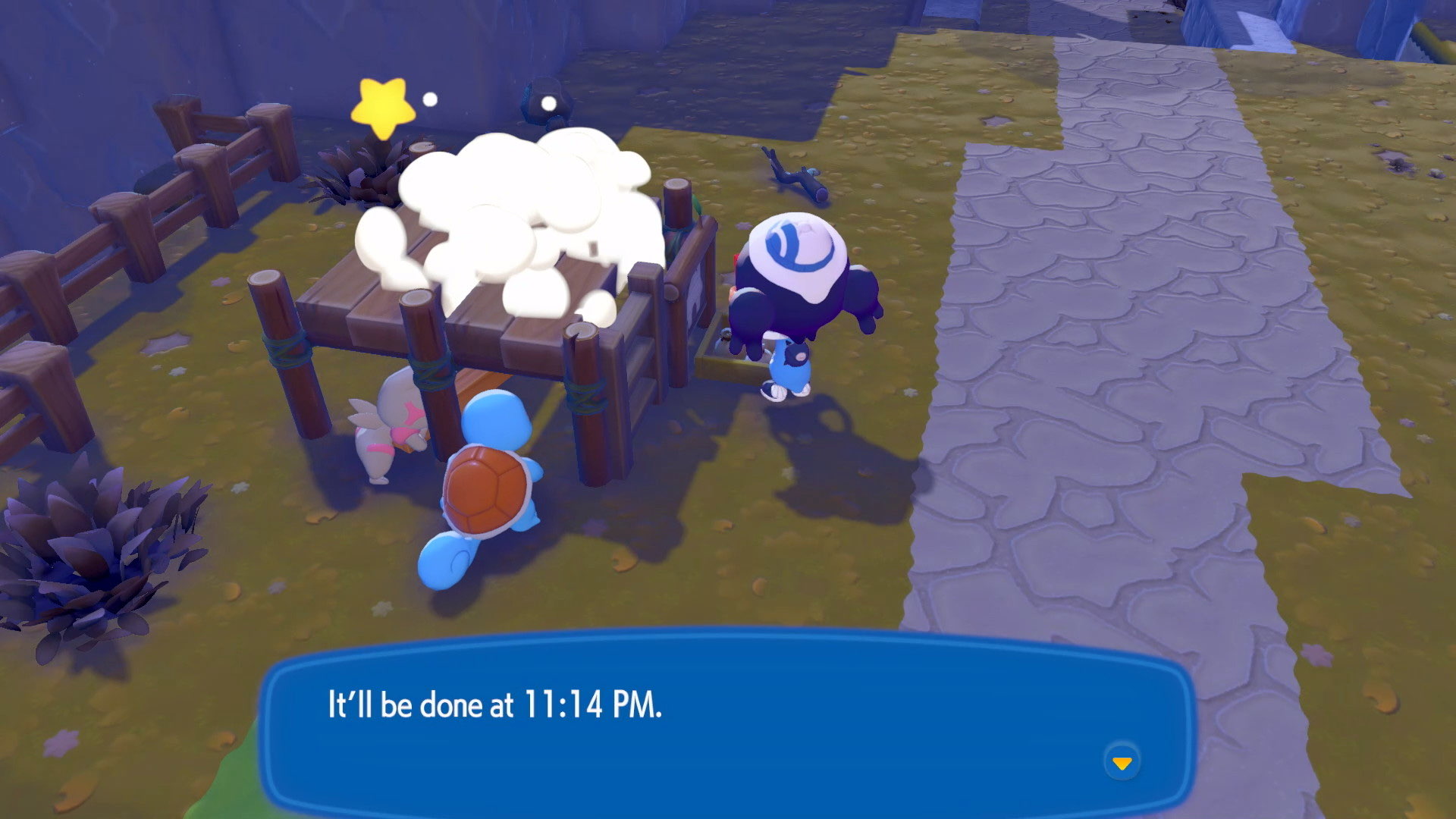
I love when a game’s clock matches that of real life. It adds to the immersion when the Pokemon yawn and head to bed when I too can barely keep my eyes open. Construction time, vegetable and tree growth are also linked to real time. While this may appear as a set back for our impatient nerves, it gives time for exploration, resource gathering, side quests, planting flowers – it’s important to stop and smell the roses.
PIKACHU, USE ‘CHARGE’
In terms of system performance, Pokopia plays near perfectly. To my untrained, glitch blind eyes I experienced no noticeable lag, even when adding extra items to an area. The art style is reminiscent of a colourful wholesome children’s cartoon show, complemented perfectly by the innocence of the Pokémon.
A battery level of 87% allowed me approximately 2 hours of gameplay…
When playing any game, I often find myself mesmerised by the finer details, like in Pokopia, the surfaces that glistened as the shifting light or a dry spot of land would slowly darken with the rain’s moisture really caught my eye.This immersion does come at a cost though, with battery life limiting handheld play. A battery level of 87% allowed me approximately 2 hours of gameplay, which is punishing considering the addictive nature of Pokopia.
STUCK IN SPECTATOR MODE
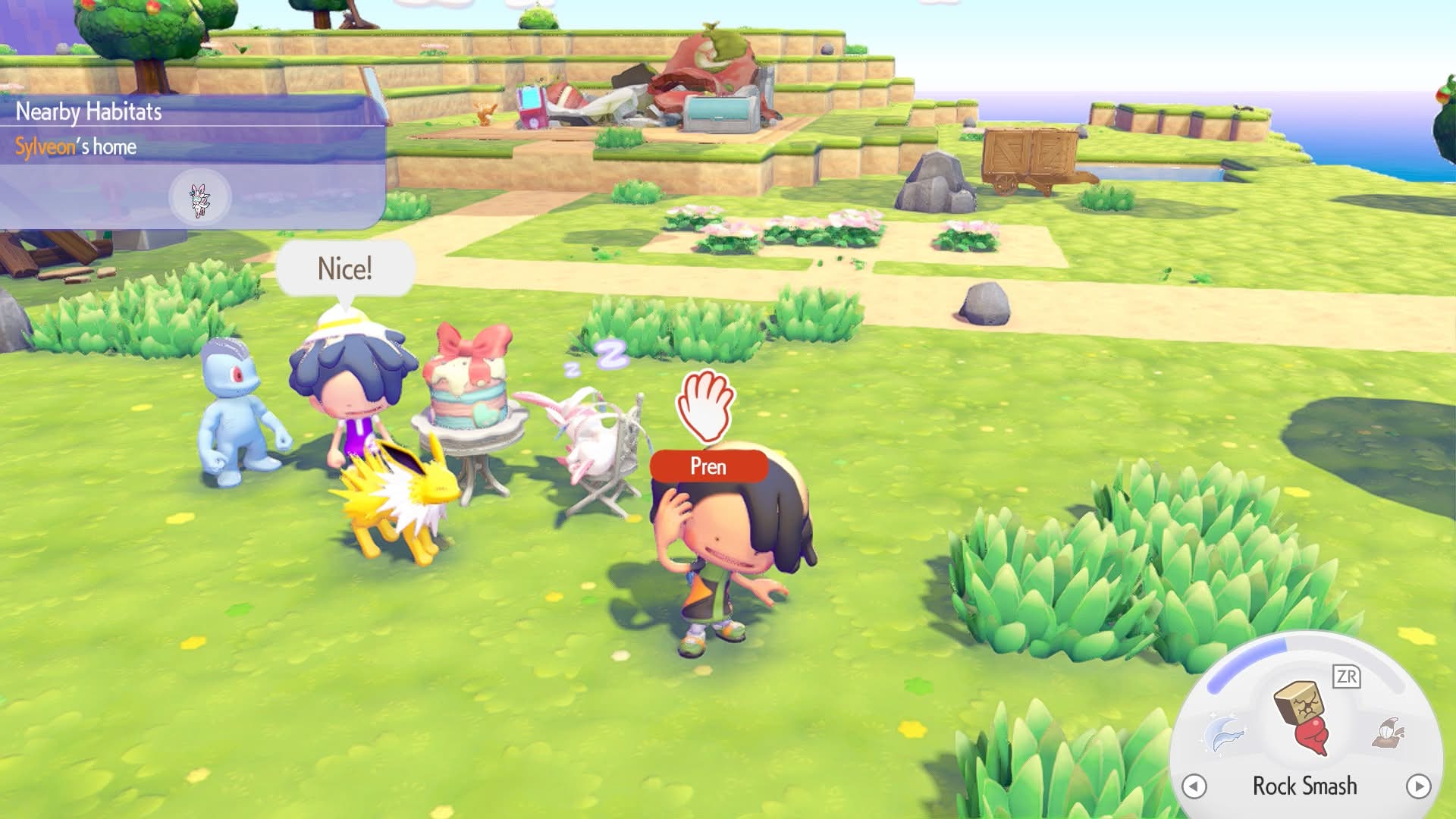
Pokopia offers 3 multiplayer areas. Players can visit or invite others to their 1. Own towns 2. Cloud Island and 3. Pallet Town locally or online. In-game communication is basic and limited to emotes (which are expanded as you explore and play, eg. I learnt a karate kick from a visiting Hitmonchan), and short preset messages (like Hello! and Good morning!). While this works for daily shopping trips, we have to use other means of communication for longer chats. I would have liked to see an in-game text-based chat system (as we have in Animal Crossing: New Horizons). So when my friend beckons me to see their newest creation, I want to say more than just “Nice!”
I want to say more than just “Nice!”
You can visit other towns (or invite others to visit yours), via a local or online connection and a randomly generated Link Code from the Pokémon Center PC. During this gameplay your town is in spectator mode, which means all players, including the host, cannot use certain abilities. For example, they cannot alter the town in any way and cannot drop or pick up items. So what can one do when visiting a friend, other than viewing their creations? Well, you can purchase items / recipes from the shop, collect a daily stamp for the weekly rally card, befriend the Pokémon, expand your pokedex, and learn about new habitats. This reminds me of forsaken evenings island hopping with the local Animal Crossing: New Horizons community, replaced now with daily shopping trips. These daily visits and outside the game chats are a highlight of my gaming sessions. A fun takeaway from visiting other towns are impromptu visits from their Pokémon and interacting with the visiting Pokémon grants some cute surprises.
PLAY NICE IN THE SANDBOX
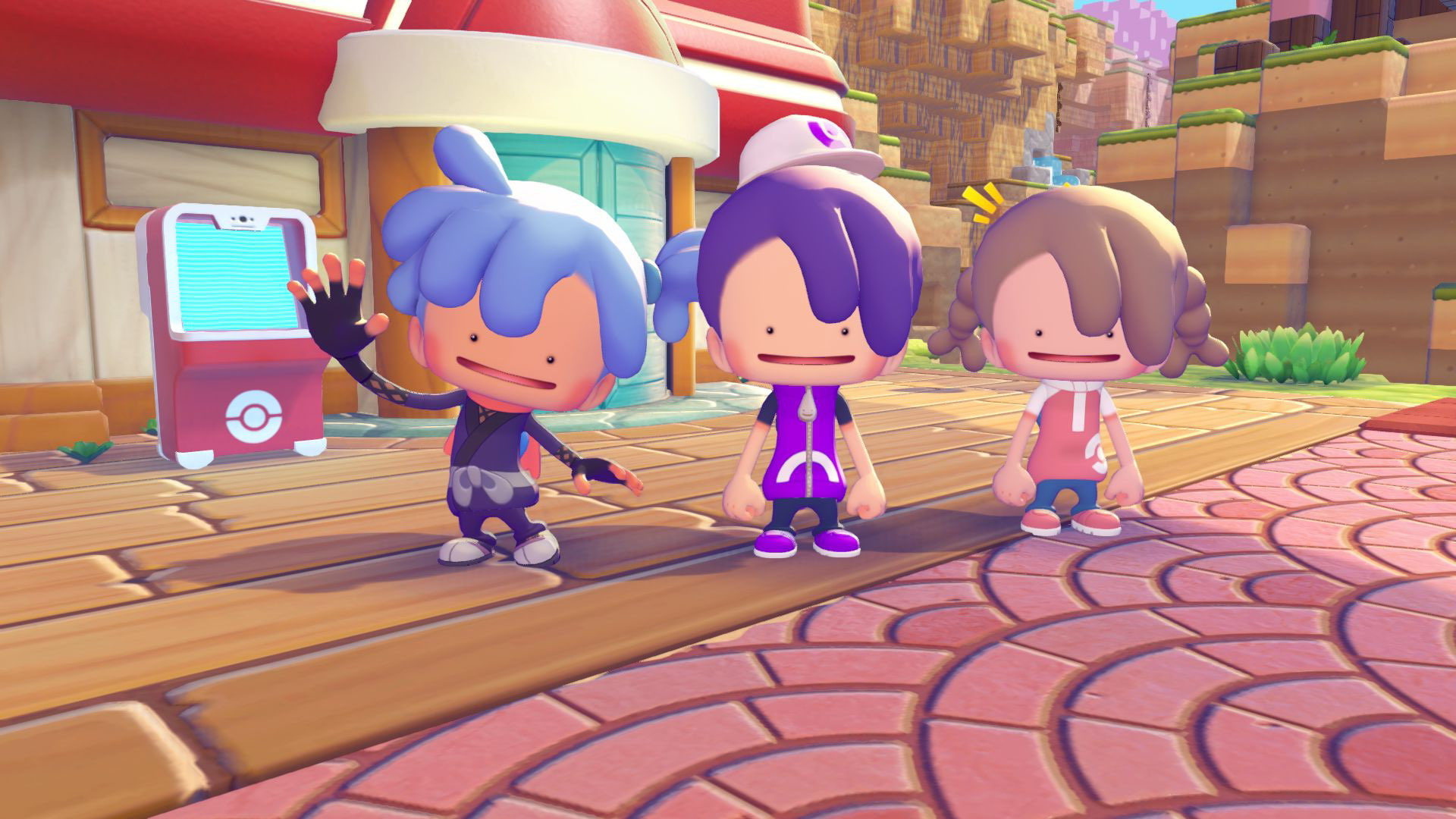
The Cloud Island is the freeroam sandbox where you can collaborate and create as you wish. Cloud Islands are not linked to your story towns in any way. This is an area that can be accessed by anyone with the Island’s address and Link Code / the in-game Virtual mode. Similar to Cloud Islands, Pallet Town is a sandbox area with no story, where you can build and create as you desire on your own or with the assistance of others (via Link Play with local or online connection or GameShare). This is the only part of the game that can enjoy the Gameshare feature, allowing you to locally Gameshare to a Nintendo Switch 1 or 2 or online Gameshare via Game Chat with another Nintendo Switch 2 user who does not need to own Pokopia. You can also bring along Pokémon from your own town to visit or help in Pallet Town. I tried Gameshare locally with a Nintendo Switch Oled with my son, who was aghast(ly) at the graphical difference between the Switch 2 and Oled, but was promptly immersed in a game of tag trying to use Ditto’s different abilities against me.
It feels like Pokopia will be more than a passing craze.
GameShare has additional limitations with the visiting players receiving a random customisation and no options to change, the use of some abilities is turned off for all and only the host is able to craft. These limitations make sense considering the system requirements of the game and with Palett Town still being the host’s town unlike the shared Cloud Island. I still appreciate that I can play Pokopia with my children from one copy of the game. The nature of the game was enough to distract away from these limitations giving us hours of building fun. We are still in the very early days of what looks to be an exceptional time-hogging game. With so many areas for creativity as well as collaborative building, it feels like Pokopia will be more than a passing craze.
LET’S GET HUMID!
If you’ve been around social media recently, you’ve likely noticed that Pokémon Pokopia has achieved plenty of love and praise from the Pokémon and general gaming community. Pokopia is presently the highest rated Pokémon game, and has already achieved phenomenal sales, prompting many new Nintendo Switch 2 console sales. The game is a delight, from the warm soul embracing background music to the quirky beeps and bops of the sound effects. Having rolled the credits (with the heaviest heart), I was concerned about post story playability. Would Pokopia falter with gameplay losing its appeal once the main story is completed? More than a week later and Pokopia’s endgame keeps giving. There are incomplete side quests, a broken world still needing healing, and the core motivator for all Pokémon gamers, I did not Catch ‘em all yet. My Pokémon utopia is a work in progress, and block by block I’ll be therapeutically healing their world. In my simple eyes, there is no question Pokémon Pokopia is a 2026 Game of the Year contender!
REVIEW CODE PROVIDED BY: NINTENDO
For more Nintendo Reviews, click here.






0 Comments