
Metroid Prime 4: Beyond feels like a classic adventure the leans heavily on what made the Prime series great. Sure, it doesn’t reinvent the formula, however, thanks to familiar returning features, a few new mechanics and excellent visuals & sound, it refines the formula just enough to make it exciting to master a new alien world again.
Lost in Space
It’s been a long wait for Metroid Prime 4: Beyond. In fact, we’ve perhaps waited longer for Samus to return than the Research Centre has been waiting for her arrival on Tanamaar after an SOS alert signals her help. Upon landing, Samus quickly realises that things are far worse than she could have ever imagined.
Welcome to the remainder of your adventure… Viewros.
Metroid eggs hidden within the Galactic Federation research facility have been stolen by Sylux, who twists their imprinting nature into a weapon. Through brutal experimentation, he creates Metroids capable of merging with and controlling other beings, using them to seize command of Space Pirate forces and launch coordinated raids on Federation research centres. More worrying still, Sylux is after a mysterious artefact. After confronting him, an incident occurs that sees Samus abruptly teleported to a brand-new planet. Welcome to the remainder of your adventure… Viewros.
A Forgotten Civilisation
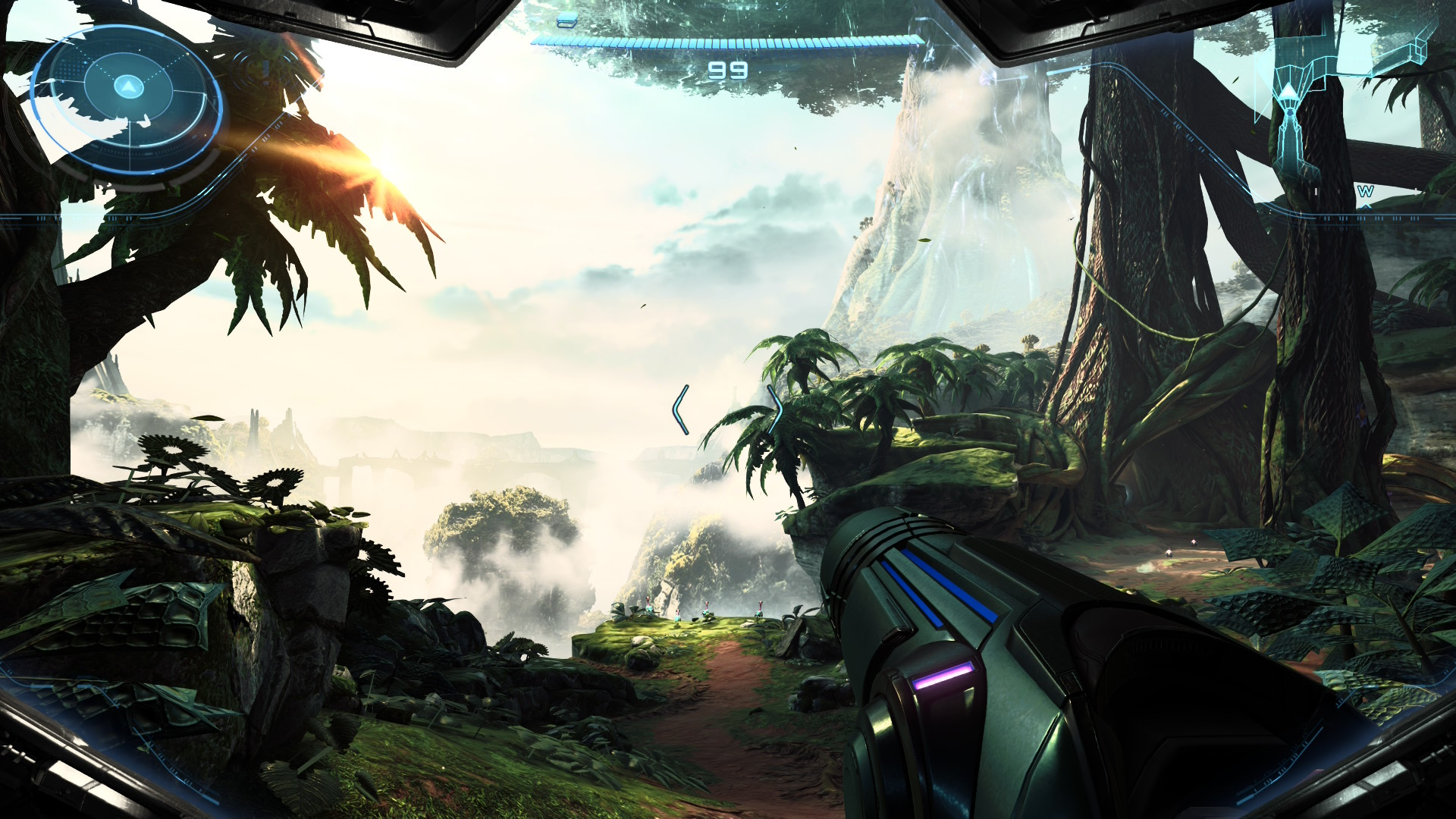
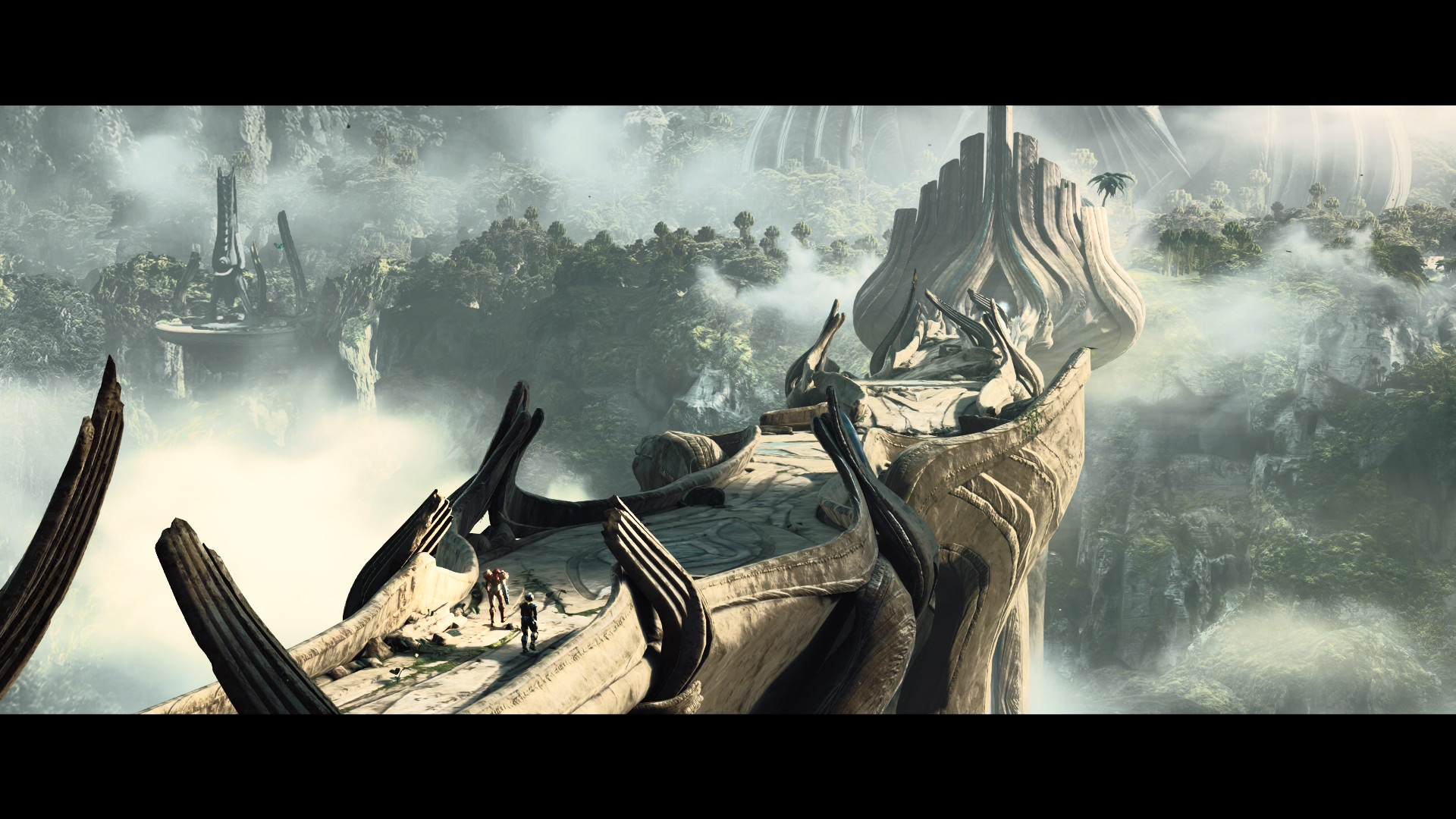
It’s on Viewros that you’re introduced to its former inhabitants, the Lamorn, and the many secrets the planet holds. Your first area of interest is the beautiful jungle region of Fury Green. Metroid Prime 4: Beyond is one of the most visually striking games on the Switch 2, and running at 4K and 60fps it looks stunning. If you own a 120fps-capable television, you can opt for even higher frame rates at the cost of some resolution, but the quality mode performs
so well that it rarely feels necessary to switch.
Beyond is one of the most visually striking games on the Switch 2.
After first establishing contact with the Sacred Tree, the Lamorn priest, Thesarh, built a temple deep within Fury Green, creating what would become the Temple of Memory. For generations, the Lamorn lived a life of faith, worshipping the Sacred Tree and preserving their history and knowledge within it. Over time, however, the rise of the Machine Era saw these traditions fade, and the temple’s spiritual importance was gradually forgotten. More on that era later. For now, Samus has one clear objective: locate five keys to access the Master Teleporter and find her way home.
More Puzzle Than Shooter
Samus may be confused about how she ended up on Viewros, but through discovery it soon becomes clear why she’s here. It’s important to understand that Metroid Prime 4: Beyond is, at its core, more of an adventure-focused first-person puzzle game than a pure shooter. Yes, you’ll still be blasting everything and its dog to bits, but the appeal that sets it apart is the constant sense of discovery.
The game is at its best when it lets you piece things together slowly, rewarding patience and curiosity rather than reflex alone.
That sense of exploration extends to how the world reveals itself. Every new area introduces something unfamiliar that could be a mechanic, an environmental twist, or a problem that requires observation rather than firepower. The game is at its best when it lets you piece things together slowly, rewarding patience and curiosity rather than reflex alone.
The Joy of Discovery
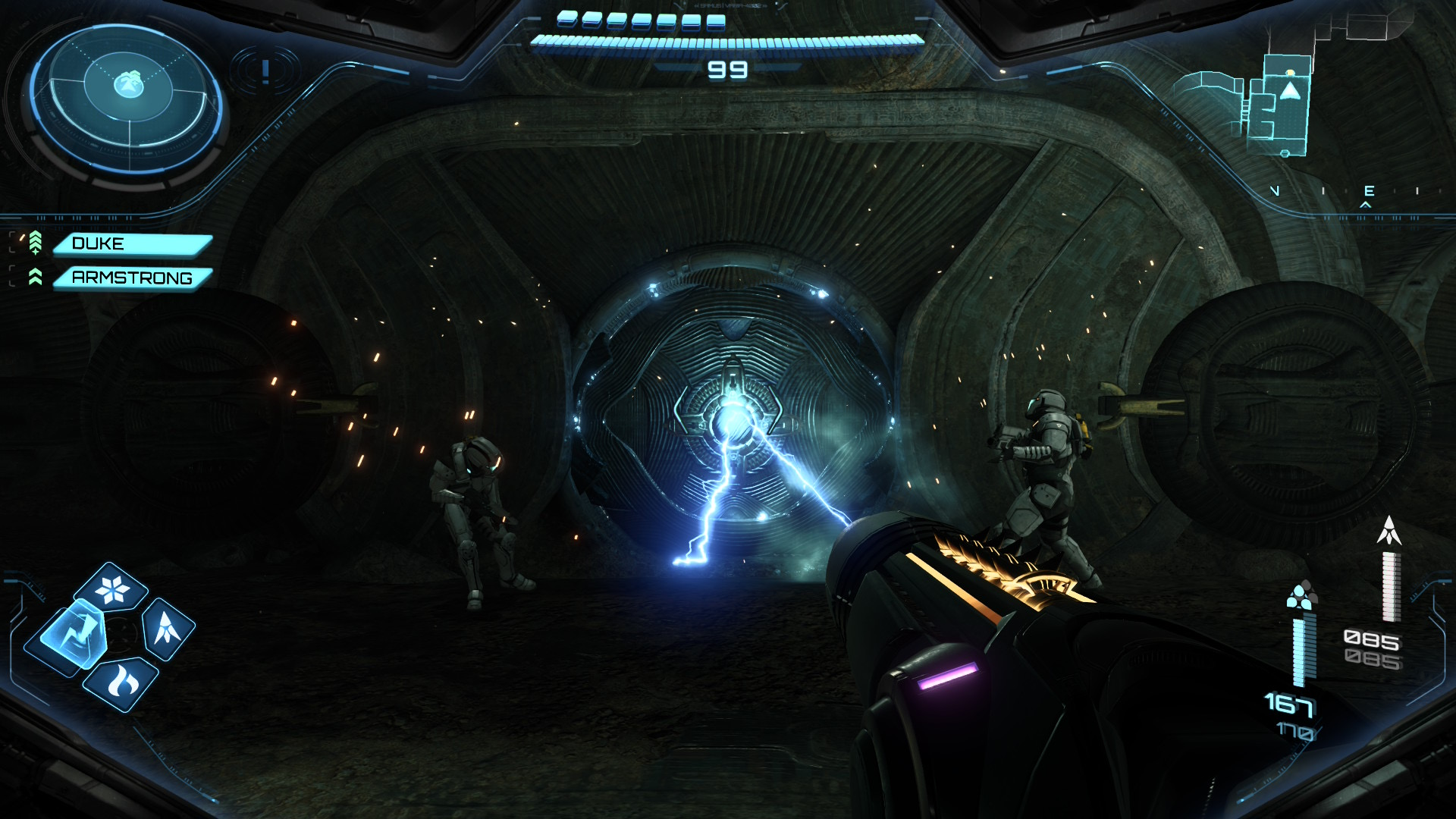
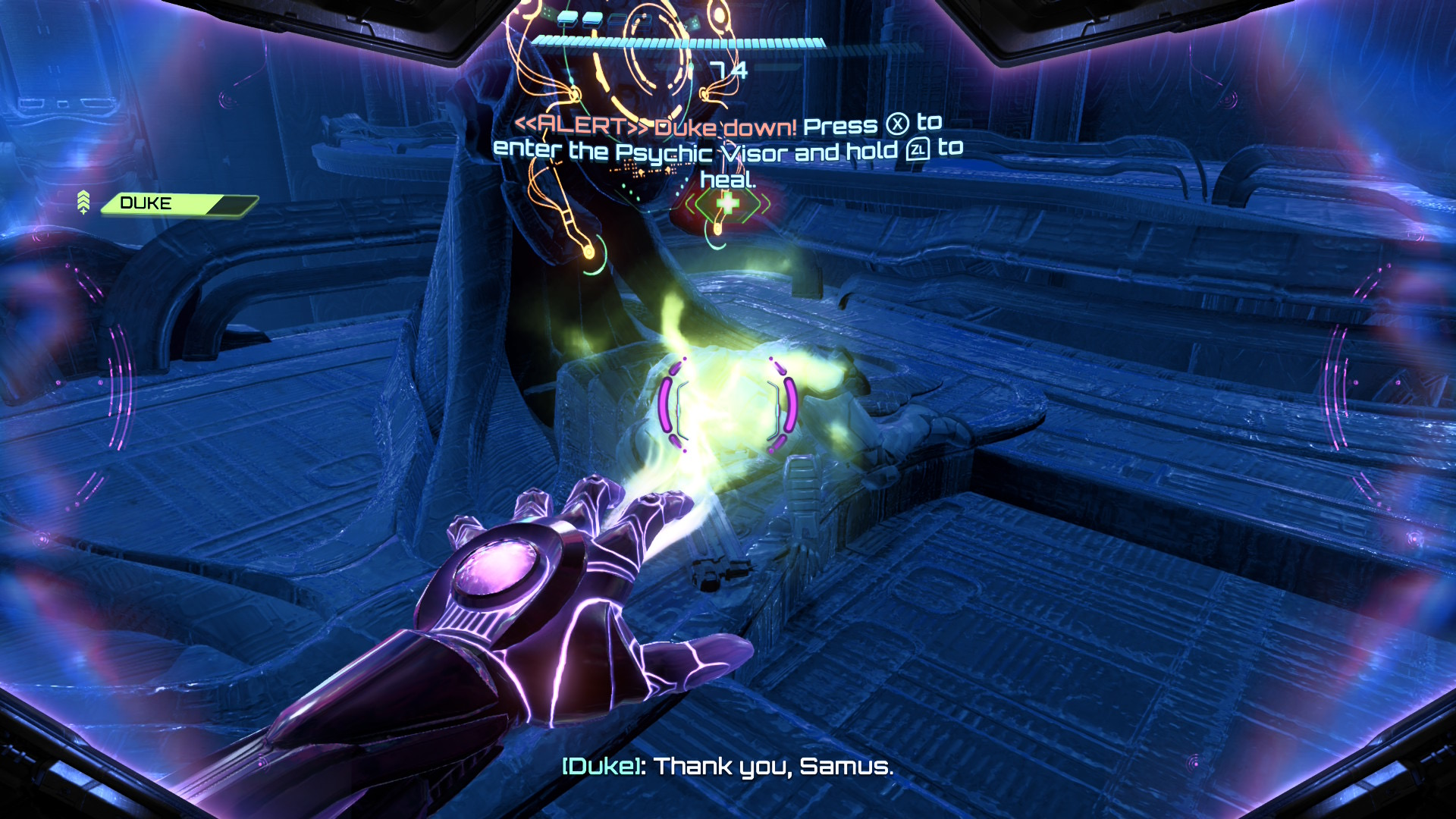
One of the more welcome discoveries is the presence of NPCs who assist you on your journey. Early on you’ll meet Mackenzie, one of several characters who fill the role of a general “fix-it” ally. His help proves invaluable. As with previous Metroid Prime titles, Samus begins stripped of her upgrades, armed with little more than her basic psychic beam shot. Progression comes from systematically uncovering hidden upgrades and abilities scattered throughout the world. Mackenzie becomes a recurring stop as you return to enhance your arm cannon with newly discovered tech. What makes Beyond feel distinct is how the Lamorn have harnessed green energy and crystals to develop new weapons. Chief among them is the Control Beam.
Nearly everything becomes a puzzle of some sort, and when that inevitable “aha!” moment clicks into place, it feels genuinely rewarding.
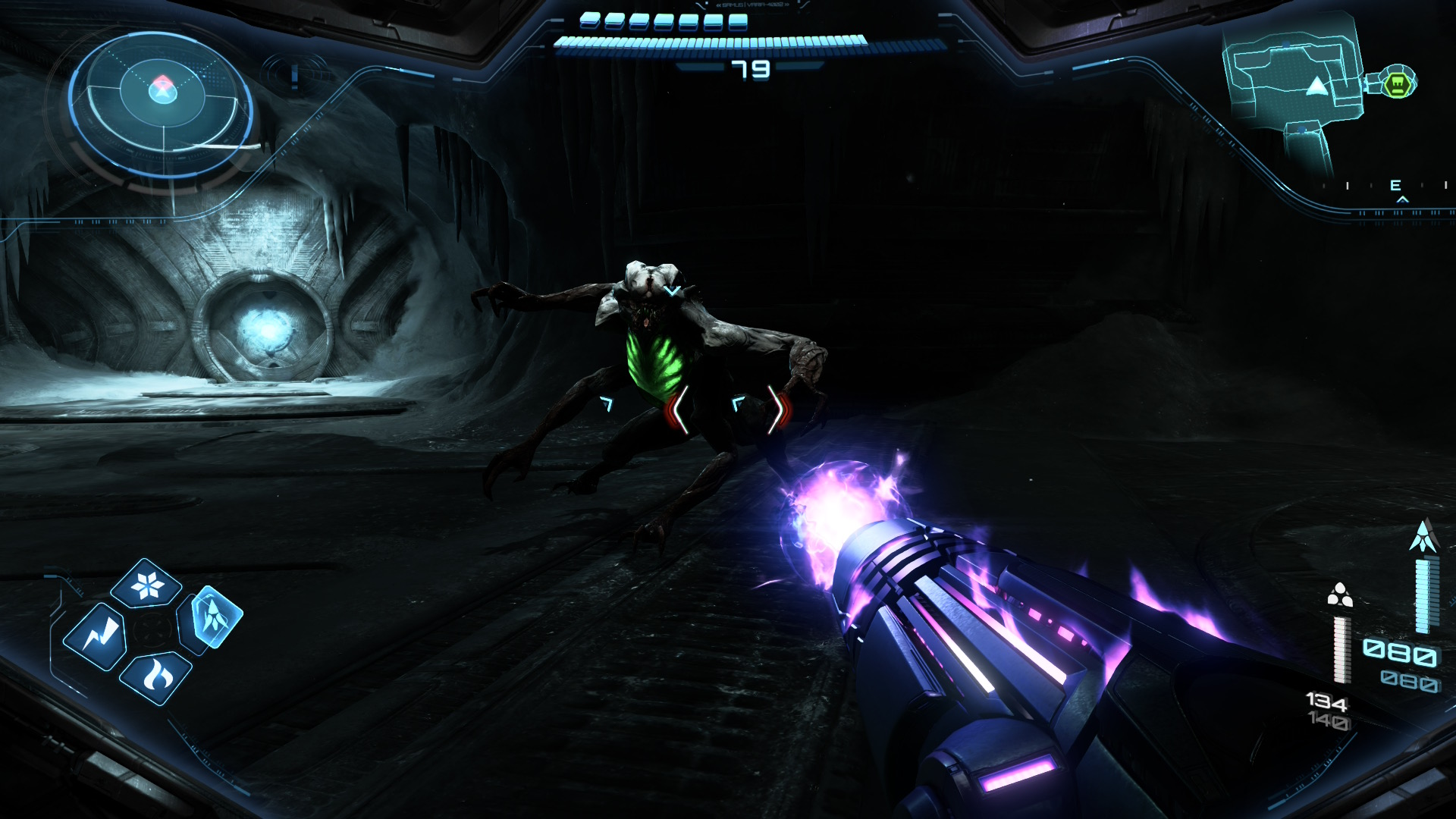
Scanning your surroundings, enemies, and objects remains absolutely essential. Many puzzles and encounters can’t be brute-forced, as their solutions are hidden beneath the surface. It’s here that the Control Beam truly shines, allowing Samus to guide a missile-like beam in bullet time. This isn’t just useful for precision during massive boss fights. If a door has been barricaded from the inside, you might guide a missile through an open roof or window to destroy the obstruction. Nearly everything becomes a puzzle of some sort, and when that inevitable “aha!” moment clicks into place, it feels genuinely rewarding.
The sweet sound of… mobility
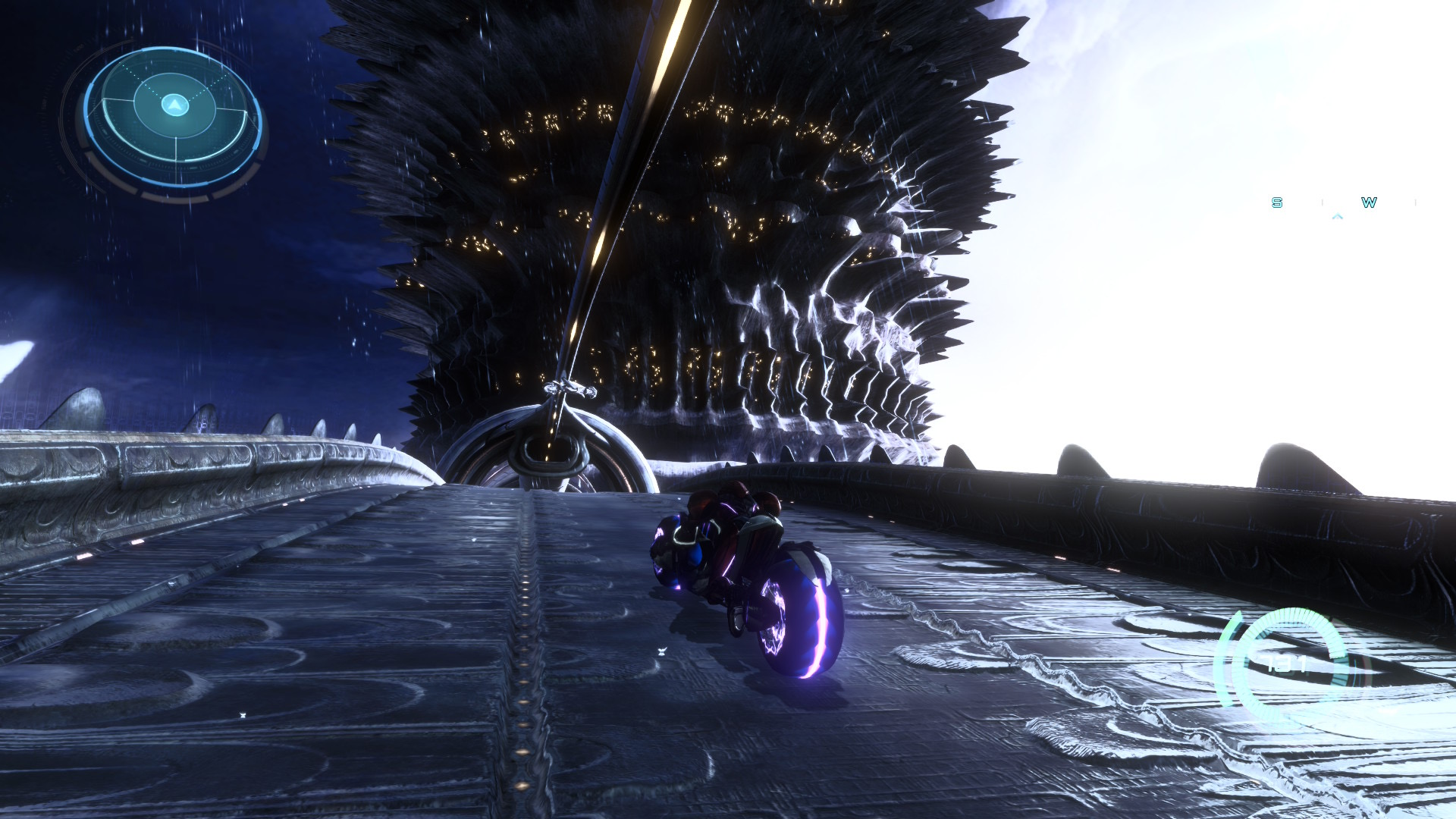
As expected, the game’s biomes cover familiar ground with fire, ice, and earth-based regions. However, instead of a traditional water zone, that energy has been redirected into one of the first areas you’ll explore, Volt Forge, a region where lightning reigns supreme. Volt Forge is also where you’ll discover your new favourite mode of transport: Vi-O-La, your two-wheeled vehicle. This area showcases a world where machines once ruled, and Vi-O-La itself is a failed product that never reached mass production. Naturally, it falls to Samus to restore power and reconstruct it. Once operational, the bike makes exploring the open-world desert region, Sol Valley, far more enjoyable.Sol Valley strikes a good balance in scale. It’s large enough to encourage exploration and hide meaningful rewards, but not so vast that it becomes exhausting.
As with most Nintendo implementations of a 3D Map, it’s helpful at times and frustratingly vague at others.
Scattered throughout are Shrines containing weapon upgrades and useful items, while green crystals dot the landscape. Smash them while riding Vi-O-La or blast them with missiles while on foot, to collect resources that can later be exchanged for rewards back at the Temple of Memory. Navigation becomes increasingly important as you travel between open areas and more linear zones. When you enter locations like Volt Forge’s interior, the Great Mines, Flare Pool, or the Ice Belt Bio Lab, the game snaps back into the classic Metroid Prime structure of tight corridors, locked doors, and backtracking once new abilities are unlocked. Around every corner is a new enemy with a learning curve that scanning can overcome, or a corridor that ends in a door you can’t yet breach. Reading the three-dimensional map is still crucial, but Beyond introduces occasional radio guidance from Mackenzie if you’re completely stuck. As with most Nintendo implementations of this feature, it’s helpful at times and frustratingly vague at others.
Point, Click… Cramp!
The much-talked-about mouse controls also make an appearance. They work well, but they take time to configure and adjust. Sensitivity is high by default and will almost certainly need tuning. There’s also the reality of using a small controller in a rather awkward hand position, which can feel uncomfortable, especially for those, like me, with larger hands.
The Pro Controller or standard Joy-Con setup remains the best way to play.
Motion controls are solid too, particularly for players who enjoyed the Wii versions of earlier titles. That said, the Pro Controller or standard Joy-Con setup remains the best way to play. Mapping jump and scan to the trigger buttons allows you to stay fully engaged during intense boss encounters without lifting your thumb from the right stick. And having a single button to lock-on is still better while in the thick of it.
Tradition
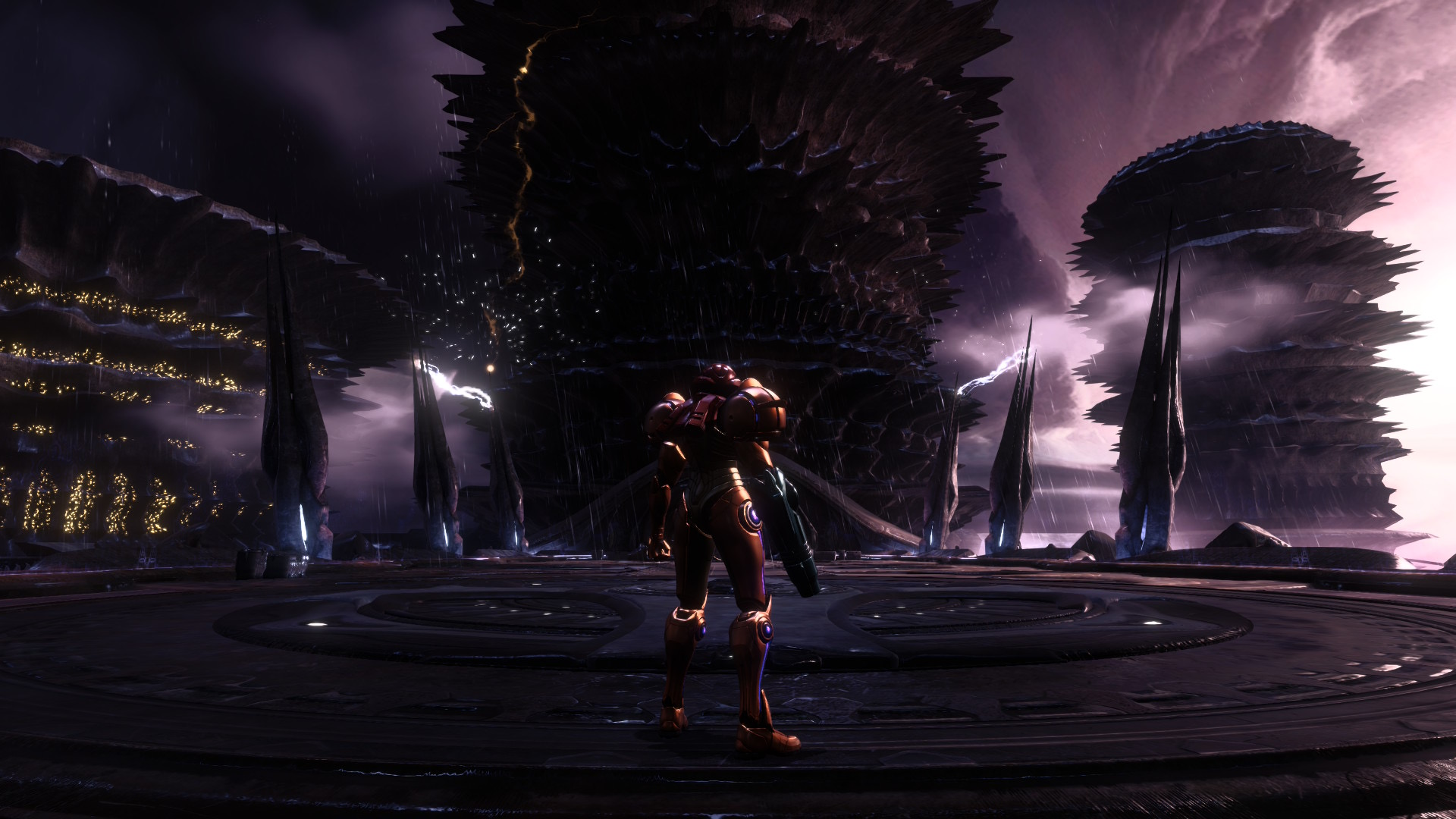
Metroid Prime 4: Beyond is a familiar experience that lasts around 15 hours from start to finish. Is it the best game in the series? No. Is it the disappointment some might have you believe? Absolutely not. It’s a classic Metroid Prime semi-open but mostly linear adventure, complete with energy tanks, missile expansions, morph-ball labyrinths, and those unmistakable sound effects and soundtrack that reminds you that you’re slowly mastering an alien world. It doesn’t reinvent the formula, it refines it. And sometimes, returning home doesn’t need fireworks. It just needs a familiar tradition.
REVIEW CODE PROVIDED BY: NINTENDO
For more Nintendo Reviews, click here.






0 Comments